


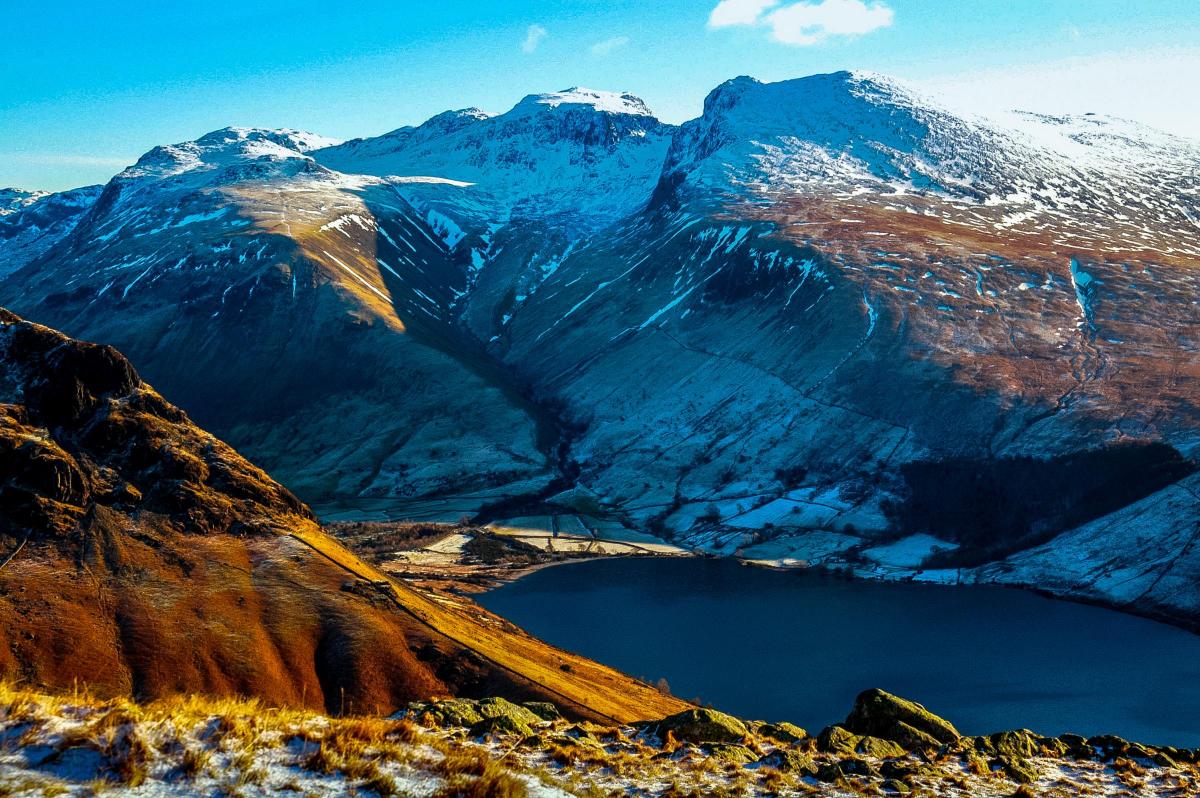


The Lake District receives around 18 million visits every year.
As we've covered previously, the pressure that brings — on footpaths, on water quality, on communities and on house prices — is growing harder to ignore. But there is a different way of thinking about tourism, one that goes further than simply doing less damage, and it is quietly reshaping how Cumbria's tourism industry operates.
The idea is called "regenerative tourism", and it has moved from conference jargon to practical policy. Rather than asking visitors to minimise their impact, it asks something more ambitious: could a visit actually leave the Lake District better than you found it?

What does "regenerative" actually mean?
Traditional "sustainable" tourism set itself the goal of preserving what already exists. Regenerative tourism sets a higher bar: "giving more to the destination than it takes," in the words of Cumbria Tourism, "by supporting positive social, economic, cultural and environmental benefits."
In 2024 all of England's National Parks, including the Lake District, published a shared vision for regenerative tourism — one in which every visit makes a net positive contribution to nature, communities, and the local economy, and in which tourism plays an active part in reducing carbon emissions and restoring biodiversity. For the Lake District specifically, Cumbria Tourism's Destination Management Plan has embedded this approach as its guiding framework, with a stated goal of "growing the value of tourism without growing the volume."

What is already happening in Cumbria?
The regenerative approach is not purely theoretical. A number of concrete initiatives are either already under way or gathering momentum across the county.
Visitor giving
The Lake District Foundation's Visitor Giving Scheme lets accommodation providers and visitor attractions invite guests to add a small, voluntary donation to their booking or bill. The money funds practical conservation: repairing footpaths on popular routes such as Helvellyn and Catbells through the Fix the Fells partnership, lake clean-ups, biodiversity projects, and heritage work. Other schemes funded through visitor giving support Mountain Rescue, Cumbria Community Foundation, Growing Well, Grasmere Gingerbread's Sarah Nelson Fund (which tackles homelessness), and the English Lakes Hotels Trust Fund for community projects across the county. Donations can also be made directly at the Lake District Foundation's website at any time.
Events are part of this too. Another Place hotel's Fells and Flow Festivals donate proceeds to the Lake District Foundation's work across Cumbria — water quality, biodiversity, heritage and farming.
Regenerative business in practice: Honister Slate Mine
Perched high on Fleetwith Pike, Honister Slate Mine offers a working example of how a visitor attraction can embed regenerative values throughout its operation. It generates all its own power on-site, runs a closed-loop production system in which every fragment of slate — from large building blocks to slate dust — is put to use, and runs weekly litter picks across the surrounding routes. Its café sources meat, dairy and baked goods from independent Cumbrian producers, and the on-site shop is stocked with work from local artisans.

"Every visitor to Honister plays a part in our regenerative tourism efforts," the centre says.
"Whether you're exploring the mine, crossing the Infinity Bridge, or simply stopping for a coffee in our café, your visit directly supports sustainable practices, local businesses, and the preservation of traditional craftsmanship."
Cleaner water, joined-up action
We've previously set out in detail how the Love Windermere Partnership — nine organisations including Cumbria Tourism, the Environment Agency, United Utilities and the National Park — is working to restore the health of England's largest lake. Part of that work involves helping tourism businesses have better informed conversations with their guests about water quality, water efficiency, and what visitors themselves can do to help.

Dispersing visitors and slower travel
One of Cumbria Tourism's core aims is to shift visitors away from the most congested hotspots towards less-visited corners of the county — the western valleys, quieter villages, and off-season weeks that rarely appear in travel articles. The Three Valleys project, covering Hawkshead, Langdale and Ullswater, is working with local partnerships to create area-specific sustainable transport solutions as part of this broader effort.

On public transport, progress is tangible. Last week a new combined train-and-bus ticket was launched, allowing visitors arriving in Penrith by train to continue directly to Keswick by bus on a single ticket throughout the year — the fruit of Cumbria Tourism's award-winning "Let's Go Car Free" campaign, which has already reported increased passenger numbers on local rail services.
Visitors to Windermere can combine Windermere Lake Cruises with unlimited Stagecoach bus travel on Central Lakes Zone and Explorer Zone passes; the Lakes Day Ranger ticket combines train, bus and lake cruise in one purchase. The Wasdale Shuttle Bus returns at weekends and bank holidays through to September 2026, easing road pressure in one of the Lakes' most beautiful and congested valleys.
How you can visit more responsibly
None of this requires any particular sacrifice or expense. Here are the choices that make the most difference.
Travel differently
- Arrive by train and use buses, boats and bikes to get around once you're here. The carbon saving per visit is significant — and the journey itself becomes part of the experience.
- Try the new Penrith-to-Keswick combined train-and-bus ticket, or the Lakes Day Ranger for unlimited travel by rail, bus, and boat.
- If you do drive, use the designated car parks and join a Park and Ride scheme where available. Roads through Borrowdale, Langdale and Wasdale were not designed for the volume of traffic they now carry.
Go where others don't
- The western Lake District — Ennerdale, Eskdale, Wasdale, the Duddon Valley — is quieter, wilder, and far less visited than the central Lakes. The scenery is just as spectacular; the car parks are rarely full.
- Visit in spring, autumn or winter. Easter and summer bank holidays account for a disproportionate share of the annual damage to paths and water quality; the Lakes in October or February can be a revelation.
Book wisely
- Stay with businesses that participate in the Lake District Foundation's Visitor Giving Scheme — look for it on booking pages and at reception. Even a small donation added to your bill goes directly to path repair or habitat restoration.
- Choose places that source food locally. Keeping tourism spending in-county through local procurement is one of the most direct ways a visit can benefit Cumbrian farmers, producers and communities.
- Stay longer. A four-night stay generates far less carbon per visitor night than two back-to-back two-night visits — and gives you time to discover the quieter places.

Respect the fells and the water
- Stick to established paths, particularly on heavily eroded summits like Scafell Pike and Helvellyn. Fix the Fells estimates it costs £150 to create every new metre of path; staying on the route you can see costs nothing.
- Take all litter home, including food packaging and biodegradable waste such as fruit peel. Carry a small bag to collect litter left by others.
- Avoid wild camping in sensitive areas. As readers told the Gazette, irresponsible camping — gear left behind, fires on the grass, waste near water — is one of the most damaging and fastest-growing pressures on the landscape. Read more: Tourists are ‘killing the Lake District’
- When swimming in the lakes and tarns, check local advice before getting in, particularly after heavy rain or if you are near a storm overflow outfall. The blue-green algae warnings that appear on Windermere and other lakes in summer are genuine health risks. Read more: What is happening to Windermere? The pollution crisis explained
Give something back
- Volunteer with Fix the Fells on one of their path repair days — no experience is needed and all equipment is provided. Details are at fixthefells.co.uk.
- Donate to the Lake District Foundation, which funds projects across nature, water, heritage and access.
- Shop in independent local shops, eat in locally-owned cafes and pubs, and buy Cumbrian produce where you can find it.

What this means for the bigger picture
Regenerative tourism is not, on its own, a solution to the pressures described in our feature on over-tourism and our explainer on the tourist tax proposals. Eighteen million visits a year will still strain roads, paths and water no matter how thoughtfully individual visitors behave. The structural questions — about a visitor levy, about vehicle charging, about planning rules for holiday lets — require political decisions that go beyond personal choice.
But the two things are not in competition. Individual behaviour and collective policy can move in the same direction. And there is something to be said for the idea that the Lake District's long-term future depends not just on how many people come, but on whether they arrive as consumers or as — even temporarily — custodians.
Friends of the Lake District put it plainly on their visitor levy campaign page: "We want every visit to contribute to caring for the landscape."


Share